Download Language Freeware

Byki Free Language Software Downloads Logo

Byki is free software for learning over 70 languages. It's available for all the most popular languages as well as many minority and less-taught languages. Try it now!

You Make Language Happen

Free Language Newsletter

Discover the magic of learning languages.

Subscribe to the Free Language Letter.

Your Name:

Your Email:

Ask Questions, Get Answers

Ask Language Questions

Ask anything about learning and teaching languages! Share your language questions.

View questions that have been asked and answered. Together we are creating a collective knowledge base for effective language learning and teaching. You can help!

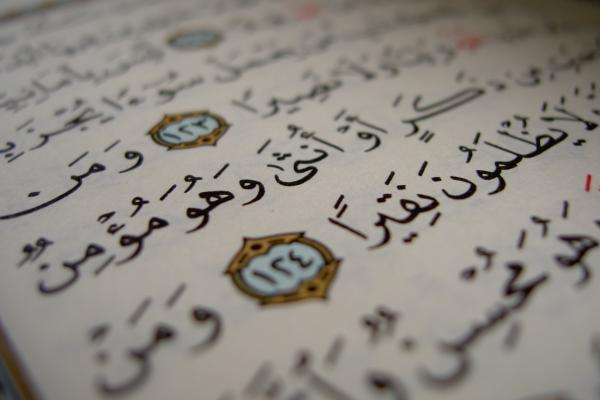
study arabic books

Free Arabic Phrasebook

Learn Survival Arabic

Wikitravel users have collectively created a free Arabic phrasebook with the goal of making it possible for travelers to "get by" while traveling in areas where Arabic is spoken.

Wikitravel phrasebooks are available in many languages and each one varies in depth and detail. Most of the phrasebooks include a pronunciation guide, a general phrase list, information about dates and numbers, a color list, transportation-related phrases, vocabulary for shopping and phrases for eating and drinking. Some are even more in depth, and all are free!

From Website

Your rating: None Average: 3.1 (15 votes)

Institute of the Language of the Quran Toronto Logo

Summary

LQToronto.com is the official website of the Institute of the Language of the Quran in Toronto. The website is not for profit, and offers all of the Madinah Arabic courses for free as downloads of the texts and viewing of the videos.

There is an amazing amount of material available for free on this website. It is enough to allow an individual learner to learn to read, write and speak the Arabic of the Qu'ran without any further materials - truly amazing!

Also on the website is a shop where you can purchase the texts at cost, with no additional fees. Finally, you may want have a look at and participate in the site's nascent forum.

From Website

V. Abdur Rahim was born in the small town of Vaniyambadi in the state of Tamil Nadu, India in 1933. After finishing his secondary school studies, he joined Presidency College, University of Madras where he majored in English Language and Literature. He graduated in 1957. In 1964, he joined al-Azhar University, Cairo, where he did his M.Phil. and Ph.D. in Arabic Philology.

LQToronto Logo

It is to be noted that Abdur Rahim learnt Arabic by himself. The school where he did his secondary school studies offered Arabic, but the lessons it offered consisted of only memorizing the conjugation tables. Abdur Rahim detested this method. He thought that it was the most unnatural way of learning a language. Only dead languages like Latin, Syriac, etc. are taught this way. Living languages teach sentences straightaway. He decided to design a curriculum to teach Arabic to non-native speakers of Arabic.

In 1969, he joined the Islamic University of Madinah to teach Arabic Philology. Here, he was also associated with the Programme of teaching Arabic as a foreign language. The course he designed for this purpose is now known as Durûs al-Lughaħ al-‘Arabiyya ħ li-Ghair al-Nâtiqîna Bihâ. (Now these books are popularly known throughout the world as “MADINA BOOKS”.)

When he was learning Arabic by himself, Abdur Rahim studied the many problems that beset the non-native students of Arabic, and tried to solve them. He discovered that all these problems can easily be solved by applying the principle of taqdîm al- usûl ‘ala al-furû‘, i.e. teaching the primary elements before the secondary elements. The following are some of the manifestations of the application of this principle:

1. Teaching the primary case-endings before the secondary endings, so you teach the masrûf noun before the mamnû‘ min al-sarf, and the al-af‘âl al-arba‘aħ before the al-af‘âl al-khamsaħ.
2. Teaching the sâlim verb before the other categories.
3. Teaching the al-mudâri‘ al-marfû‘ before the al-mudâri‘ al-mansûb or al-mudâri‘ al-majzûm.
4. Teaching the plural of intelligent nouns before that of non-intelligent nouns.

Learn the Arabic of the Quran for Muslims

Another principle Abdur Rahim advocates is that rules of waqfshould not be applied during the teaching stage, for in that case the student cannot learn the correct ending of the last word in the sentence as, ma smu-ka and ma smu-ki, for example, are both reduced to ma smu-k.

The following are the books Dr. Abdur Rahim has written in field of teaching Arabic as a foreign language:

1. Durûs al-Lughaħ al-‘Arabiyyaħ (3 parts).
2. Key To Durûs al-Lughaħ al-‘Arabiyyaħ (3 parts).
3. Key To Exercises of Durûs al-Lughaħ al-‘Arabiyyaħ (3 parts).
4. Teachers' Guide To Durûs al-Lughaħ al-‘Arabiyyaħ (3 parts).
5. A Glossary of Words used in Durûs al-Lughaħ al-‘Arabiyyaħ.
6. Ahadith Sahlaħ.
7. Nusûs min al-Hadîth al-Nabawyyi al-Sharîf.
8. Nusûs Islâmiyyaħ.
9. From Esfahan To Madinah.
10. Al-Bâhith ‘an al-Haqq.
11. Innahumâ min Mishkâħ Wahidaħ.
12. Fi Balât Hiraql.
13. Abshir bi-Khayri Yawm.
14. Arba‘ûna Hadîthan.
15. Al-Mus‘if fî Lughati wa I‘râbi Suraħi Yûsuf.

Currently, Dr V. Abdur Rahim is Director, Translation Centre, King Fahd Qur'an Printing Complex, Madinah Munawwarah.

Visit www.lqtoronto.com

Your rating: None Average: 4.1 (57 votes)

FSI Arabic Language Courses Logo

Summary

FSI is an acronym for the Foreign Service Institute, "the (US) Federal Government's primary training institution for officers and support personnel of the U.S. foreign affairs community".

Over the years, the FSI has researched, designed and taught language courses to Foreign Service staff and diplomats. These courses are now available and licensed to the Public Domain.

FSI-Language-Courses.org is a sweet and simple website that provides users with the ability to view and download the Foreign Service Institute's courses for 31+ languages. The content is provided by individuals donating time and resources in an overall effort to provide quality languages-learning materials for free worldwide.

Sounds good to me. :)

In the Arabic section of the site, there are currently 5 courses available for download:

  • Classical Arabic: The Writing System
  • From Eastern To Western Arabic
  • Levantine Arabic: Introduction to Pronunciation
  • Levantine and Egyptian Arabic Comparative Study
  • Saudi Arabic Basic Course (Urban Hijazi Dialect)

From Website

Welcome to fsi-language-courses.com, the home for language courses developed by the Foreign Service Institute. These courses were developed by the United States government and are in the public domain.

This site is dedicated to making these language courses freely available in an electronic format. This site is not affiliated in any way with any government entity; it is an independent, non-profit effort to foster the learning of worldwide languages. Courses here are made available through the private efforts of individuals who are donating their time and resources to provide quality materials for language learning.

Visit FSI-Language-Courses.org

Your rating: None Average: 3.6 (7 votes)

Syrian Arabic Logo

Summary

This resource offers a free chapter with audio and illustrations of their textbook for learning the colloquial Syrian Arabic spoken in Syria, Lebanon and Jordan.

From Website

Free Syrian Colloquial Arabic Course

Syrian Colloquial Arabic, a Functional Course by Mary-Jane Liddicoat, Richard Lennane and Dr Iman Abdul Rahim, 1998 ISBN 0-646-36958-X

Syrian Colloquial Arabic, a Functional Course is a 400-page illustrated and fully indexed textbook, accompanied by 180 minutes of authentic recorded conversations.

Your rating: None Average: 4.1 (9 votes)

Wikibooks Arabic Logo

Summary

Wikibooks is a great idea. Like Wikipedia, Wikibooks consists of content that is public domain. That means that anything there is reusable in any fashion, such as for teaching.

The Arabic Wikibook has a nice amount of information. You can start off learning the Arabic alphabet, move on to phrases and vocabulary, start to make sentences, learn about gerunds, nominative pronouns, verbs, conjugation and more.

From Website

We have noticed that many of those who wish to learn Arabic do so alone, with little or no help from others. Our goal is to help those frustrated with learning the Arabic language. We wish to help ourselves learn while teaching others. Further, we aim to present the Arabic language in an easy to learn, orderly manner. We shall not stop with the development of this book until it is a complete, accurate and comprehensive Arabic textbook for the average English speaker.

The purpose of this book is to:

1. Provide easy to understand lessons to help those with no previous experience in learning Arabic achieve fluency in reading, writing, and understanding.
2. Provide lessons for learners in an easy to use format with each lesson leading on to the next.
3. Provide lesson ideas and plans for teachers.
4. Encourage the learning of the Arabic language.
5. Provide a collection of sample sentences with translations.
6. Provide a chapter on common Arabic phrases and their meaning.
7. Provide useful charts in the appendix
8. Provide exercises with answers in order to help the student practice what they have learnt.
9. Provide instructions on ways to increase fluency in Arabic.
10. Provide resources with lessons, such as wordlists, and audio.
11. Provide links to helpful resources

All material in this book should be provided in an orderly fashion. This book must work towards giving students an understanding of Arabic to the level of being able to understand Arabic cartoon shows, Arabic news broadcasts, Arabic newspapers and Arabic literature.

Visit the Arabic Language Wikibook.

Your rating: None Average: 2.9 (7 votes)
Breaking the Arabic Code: 10 Books Reveal the Secrets to Learning the Arabic Language