learn arabic

ArabicPod101.com ArabicPod101 Learn Arabic Podcast with Audio+Video Lessons, Flashcards, Quizzes, Cultural Info, Learning Center

ArabicPod101.com Learn Arabic Podcast

Summary

From beginner to advanced levels, ArabicPod101.com is an excellent, all-around online environment for learning Arabic. The Pod101 platform, method and technology provide the necessary tools to get you immersed in the Arabic language and achieve the goals you desire and/or require.

Since ArabicPod101.com is web-based, you can access your personal Arabic Learning Center from anywhere, and it's really easy to download the podcasts and put them on your mp3 player (iPod, Zune, etc) or mobile phone to take them with you for practice and learning on the go.

One of the most important things when learning a language is good content - and ArabicPod101.com has this, and a steady flow of it. This constant flow of fresh content regards cultural aspects of Arabic you will want to know, interesting tidbits about navigating in Arabic society (whether on vacation or living abroad), practical information about getting by and much more.

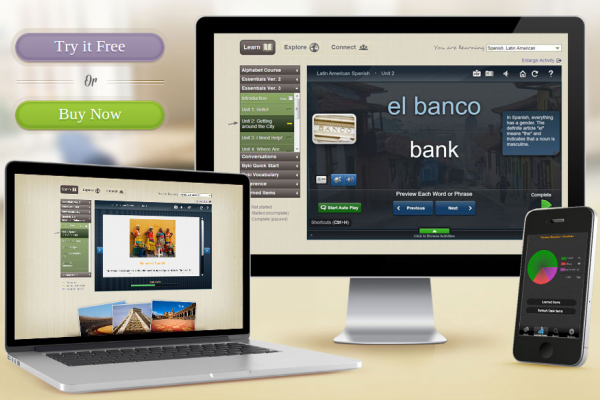
Your Arabic Learning Center brings together audio podcast lessons, lesson notes and checklists, transcripts, PDFs, video lessons, vocabulary training with flashcards and quizzes plus a Arabic dictionary, grammar bank, a verb reference and plenty more.

And if you enjoy asking questions and learning from and helping other learners, a forum is available for all users.

It's simple to try it for free and upgrade if it works for you.

From Website

At ArabicPod101.com, our goal is to make learning the Arabic language easy and fun, while also incorporating culture and current issues into our lessons. We believe that the more you speak, the quicker you learn, so we have designed our program to get you speaking right away. Situational Arabic is heavily stressed, and our team role plays various situations to demonstrate the proper form of Arabic to use when speaking with friends, customers, executives, and so-on. Knowing the proper form to use separates good speakers from great speakers.

ArabicPod101.com was developed with the hope of showing the world how fun and easy learning Arabic can be. Here at ArabicPod101.com, we truly believe that learning can be fun, while at the same time convenient. We know how busy you are and that each day brings unexpected surprises. That is exactly why we bring the lessons to you and let you decide when they start.

Our innovative, fun, and easy to use language learning system is designed to get you speaking and interacting from the very first lesson. Learn Arabic at your own convenience and pace with short, effective, fun daily lessons and a comprehensive, state-of-the-art Learning Center that provides you with the tools to take your Arabic to the next level! Our interactive learning system consists of free daily audio podcast lessons, accompanying PDF materials, a Premium Learning Center, and a vibrant user community.

Our Method

ArabicPod101.com offers a unique learning experience that cannot be found in conventional classrooms. In addition to offering lessons that can be completed on your own time, we approve all of the content we release through a government certified Arabic teacher. Here are just a few of the revolutionary advantages of our method:

Exposure to native speakers and many different kinds of voices and speaking styles…

ArabicPod101.com aims to have you speaking Arabic after just one lesson! Our lessons focus on pronunciation and listening comprehension, so that you can start practicing what you learn from our professional teachers. Inside the PDF you will find the necessary tools for reading comprehension, and thorough explanations of phrases and key grammar points, in addition to segments on cultural insight. To address speaking practice, we have state-of-the-art software to allow you to record your own voice so you can compare your pronunciation to our teachers and continue to refine your speaking skills.

When all the aspects of ArabicPod101.com are put together, this program provides students of Arabic with ultimate self-study learning course. In addition, we often provide conversations between three people to more closely simulate real-life situations.

Fresh, up-to-date content...

Many Arabic teachers who live overseas have been out of the country for a long period of time and can be “out of the loop” on current words, culture, etc. This is another major gap that we fill. Lessons are carefully crafted to include current events, words, celebrities, and so-on. This is very dynamic content.

Borderless education on-demand...

We also fill a definite demand in remote locations. Our lessons provide you with a mobile classroom, as we bring you Arabic on Demand. Arabic lessons wherever you may be.

ArabicPod101.com offers our listeners a unique learning experience that delivers cutting-edge, dynamic content to be accessed at your convenience. With the inclusion of our lesson notes and Learning Center, we offer a full solution that provides the material, guidance, exercises, and testing to really make the knowledge your own. And it doesn’t even stop there - our vibrant and extremely helpful community provide each other not only quick answers to questions, but also give each other a sense of encouragement and motivation that is often lacking.

We focus on Arabic, and Arabic only...

Just Arabic! All we do is Arabic. ArabicPod101.com is not a generic package language learning course, such as some of the other big name language learning programs out there. Many other programs “scale” their solutions across several languages, simply recycling the same material over and over - the same pictures, the same conversations, just in a different language. But each language is unique, and at ArabicPod101.com we pride ourselves on developing a system that’s only about the Arabic language and Arabic culture!

One stop studying...

Have you ever found yourself lost on the information highway? Sometimes it’s like trying to drink from a fire hose! Hundreds of bookmarks, all with varying levels of quality and credibility. You finally find a great site, but it only updates once a year! ArabicPod101.com offers users one stop studying. The learning center has been carefully designed to provide you with the resources you will need to take your Arabic to the next level.

Visit ArabicPod101.com.


Video: How to Use the BBC Website to Learn English, Chinese, French, German, Greek, Italian, Portuguese, Spanish, More - Free!

Summary

The BBC is such an amazing resource for learning languages online for free that we've done a 6-minute video showing how you can effectively use this resource to learn at least the basics of 36+ languages.

BBC offers materials for the following languages: Albanian, Basque, Belarusian, Bosnian, Bulgarian, Catalan, Chinese (Mandarin), Croatian, Czech, Danish, Dutch, English, Estonian, Finnish, Flemish, French, German, Greek, Hungarian, Icelandic, Italian, Latvian, Lithuanian, Luxembourgish, Macedonian (FYROM), Maltese, Norwegian, Polish, Portuguese, Romanian, Russian, Serbian, Slovak, Slovene, Spanish, Swedish, Turkish, Ukrainian

Enjoy and please leave comments to help us focus our efforts!

Screencast Video

Helpful Links for this Screencast

http://freelanguage.org/learn/bbc
http://www.bbc.co.uk/languages
http://www.bbc.co.uk/languages/chinese
http://www.bbc.co.uk/languages/english
http://www.bbc.co.uk/languages/french
http://www.bbc.co.uk/languages/german
http://www.bbc.co.uk/languages/greek
http://www.bbc.co.uk/languages/italian
http://www.bbc.co.uk/languages/portuguese
http://www.bbc.co.uk/languages/spanish
http://www.bbc.co.uk/languages/other
http://www.bbc.co.uk/languages/other/quickfix


How to Learn Languages Online for Free, Video Screencast Part 1: General Introduction

Summary

This is our first humble effort to disseminate much of the good info found on this website via screencast videos that make it easy to get a picture of learning languages online for free while kicking back, watching and soaking it up rather than reading through loads of material.

With this video we offer a 10-minute intro to useful sites for learning languages online for free. The web tour covers essential resources for vocabulary, grammar, dictionaries, translation, verb conjugation, language exchange and more.

We have started a channel on YouTube for these screencasts: http://www.youtube.com/user/freelanguageorg - you can help us a lot by rating and commenting on these videos on YouTube

Please let us know what you would like to see in future videos, too. We have a series planned and will be releasing them here frequently - your input will be valued and appreciated!

Screencast Video

Links in this Screencast

http://quizlet.com
http://www.transparent.com/wotd
http://lingro.com
http://www.gutenberg.org
http://wikibooks.org
http://www.busuu.com
http://www.babbel.com
http://www.myhappyplanet.com
http://palabea.net
http://www.reverso.com
http://www.wordreference.com
http://www.google.com/translate
http://www.verbix.com
http://freelanguage.org/the-big-list


A Round-Up of 45 Mac OSX Language Software Apps: GPL Software, Freeware, Shareware and Demos from Apple's Download Center

Summary

This (lengthy) article brings together a pile of Free Software (GNU GPL'd as Public Domain), freeware and shareware for language learning and reference for Mac OS X.

Software descriptions are taken from Apple Downloads. We will be adding more GPL applications soon.

Your rating: None Average: 4.4 (189 votes)


Polyglot Culture: Quick Wikipedia Tip for Multilingual Language Surfing Goodness

 Logo

Summary

The now-ubiquitious Wikipedia.org has some multilingual gems tucked away in its folds. This article serves to point out one of the most powerful polyglot culture feaures that Wikipedia offers: the myriad articles in a multitude of languages at a single click away.

For instance, while browsing the topic "Language" on Wikipedia in English, down the left navigation bar you will find entries for the same topic in literally dozens of languages:

Afrikaans, Alemannisch, العربية, Aragonés, Arpetan, Asturianu, Avañe'ẽ, Aymar aru, Azərbaycan, Bamanankan, Bân-lâm-gú, Basa Banyumasan, Башҡорт, Беларуская, Беларуская (тарашкевіца), Boarisch, Brezhoneg, Български, Català, Чăвашла, Cebuano, Česky, Cymraeg, Dansk, Deitsch, Deutsch, Diné bizaad, Eesti, Ελληνικά, Español, Esperanto, Euskara, فارسی, Français, Frysk, Furlan, Gaeilge, Gàidhlig, Galego, ગુજરાતી, 한국어, हिन्दी, Hrvatski, Ido, Ilokano, Bahasa Indonesia, Interlingua, isiXhosa, Íslenska, Italiano, עברית, Basa Jawa, ქართული, Kernewek, Кыргызча, Kiswahili, Коми, Kongo, Kreyòl ayisyen, Kurdî / كوردی, Latina, Latviešu, Lëtzebuergesch, Lietuvių, Limburgs, Lingála, Lojban, Magyar, Македонски, Malagasy, मराठी, مَزِروني, Bahasa Melayu, Nederlands, 日本語, Нохчийн, Norfuk / Pitkern, Norsk (bokmål), Norsk (nynorsk), Nouormand, Occitan, پښتو, Polski, Português, Ripoarisch, Română, Romani, Runa Simi, Русский, Саха тыла, Sámegiella, Sardu, Scots, Seeltersk, Sicilianu, Simple English, Slovenčina, Slovenščina, Српски / Srpski, Suomi, Svenska, Tagalog, தமிழ், Tatarça/Татарча, ไทย, Tiếng Việt, Тоҷикӣ, Türkçe, Türkmen, Українська, Volapük, Võro, Walon, Winaray, ייִדיש, 粵語,Zazaki, Žemaitėška, 中文

This list discludes several languages for which this particular computer does not have fonts installed. Many of you will see font-related issues for some of the languages above. Find out more here if you do.

How to find the links.

This image shows how to find what other languages are available for a given topic on Wikipedia:

Wikipedia Language Links Sidebar

These are not translations.

Each entry is an organically-written encyclopedia article on the topic of "Language" in a language. The time and space for language and culture persists!

It's quite intriguing surfing Wikipedia for multilingual goodness. If you'd like to hear more on this topic or have something of value to share, please comment on this article!

Wikipedia Language Sidebar

Use these to learn!

This feature of Wikipedia can be used to learn and teach languages. Find a topic of interest and study up on the vocabulary in your target language, build a linguistic knowledge of specific interests, get materials for educating, compare entries in different languages to bring out cultural nuances and more. There are many ways to twist and tweak this vast maze of plurilingual content!

From Website

A language is a dynamic set of visual, auditory, or tactile symbols of communication and the elements used to manipulate them. Language can also refer to the use of such systems as a general phenomenon. Strictly speaking, language is considered to be an exclusively human mode of communication. Although other animals make use of quite sophisticated communicative systems, sometimes casually referred to as animal language, none of these are known to make use of all of the properties that linguists use to define language.

In Western Philosophy, language has long been closely associated with reason, which is also a uniquely human way of using symbols. In Ancient Greek philosophical terminology, the same word, logos, was used as a term for both language or speech and reason, and the philosopher Thomas Hobbes used the English word "speech" so that it similarly could refer to reason, as will be discussed below. More commonly though, the English word "language", derived ultimately from lingua, Latin for tongue, typically refers only to expressions of reason which can be understood by other people, most obviously by speaking.

Visit "Language" on Wikipedia in English and look at all the languages on the left navigation bar. Those are the languages for which the article you are viewing has equivalents.

Your rating: None Average: 3.8 (13 votes)


LQToronto.com Download Free Texts and View Free Video Courses to Learn the Language of the Quran with Full Madinah Arabic Course

Institute of the Language of the Quran Toronto Logo

Summary

LQToronto.com is the official website of the Institute of the Language of the Quran in Toronto. The website is not for profit, and offers all of the Madinah Arabic courses for free as downloads of the texts and viewing of the videos.

There is an amazing amount of material available for free on this website. It is enough to allow an individual learner to learn to read, write and speak the Arabic of the Qu'ran without any further materials - truly amazing!

Also on the website is a shop where you can purchase the texts at cost, with no additional fees. Finally, you may want have a look at and participate in the site's nascent forum.

From Website

V. Abdur Rahim was born in the small town of Vaniyambadi in the state of Tamil Nadu, India in 1933. After finishing his secondary school studies, he joined Presidency College, University of Madras where he majored in English Language and Literature. He graduated in 1957. In 1964, he joined al-Azhar University, Cairo, where he did his M.Phil. and Ph.D. in Arabic Philology.

LQToronto Logo

It is to be noted that Abdur Rahim learnt Arabic by himself. The school where he did his secondary school studies offered Arabic, but the lessons it offered consisted of only memorizing the conjugation tables. Abdur Rahim detested this method. He thought that it was the most unnatural way of learning a language. Only dead languages like Latin, Syriac, etc. are taught this way. Living languages teach sentences straightaway. He decided to design a curriculum to teach Arabic to non-native speakers of Arabic.

In 1969, he joined the Islamic University of Madinah to teach Arabic Philology. Here, he was also associated with the Programme of teaching Arabic as a foreign language. The course he designed for this purpose is now known as Durûs al-Lughaħ al-‘Arabiyya ħ li-Ghair al-Nâtiqîna Bihâ. (Now these books are popularly known throughout the world as “MADINA BOOKS”.)

When he was learning Arabic by himself, Abdur Rahim studied the many problems that beset the non-native students of Arabic, and tried to solve them. He discovered that all these problems can easily be solved by applying the principle of taqdîm al- usûl ‘ala al-furû‘, i.e. teaching the primary elements before the secondary elements. The following are some of the manifestations of the application of this principle:

1. Teaching the primary case-endings before the secondary endings, so you teach the masrûf noun before the mamnû‘ min al-sarf, and the al-af‘âl al-arba‘aħ before the al-af‘âl al-khamsaħ.
2. Teaching the sâlim verb before the other categories.
3. Teaching the al-mudâri‘ al-marfû‘ before the al-mudâri‘ al-mansûb or al-mudâri‘ al-majzûm.
4. Teaching the plural of intelligent nouns before that of non-intelligent nouns.

Learn the Arabic of the Quran for Muslims

Another principle Abdur Rahim advocates is that rules of waqfshould not be applied during the teaching stage, for in that case the student cannot learn the correct ending of the last word in the sentence as, ma smu-ka and ma smu-ki, for example, are both reduced to ma smu-k.

The following are the books Dr. Abdur Rahim has written in field of teaching Arabic as a foreign language:

1. Durûs al-Lughaħ al-‘Arabiyyaħ (3 parts).
2. Key To Durûs al-Lughaħ al-‘Arabiyyaħ (3 parts).
3. Key To Exercises of Durûs al-Lughaħ al-‘Arabiyyaħ (3 parts).
4. Teachers' Guide To Durûs al-Lughaħ al-‘Arabiyyaħ (3 parts).
5. A Glossary of Words used in Durûs al-Lughaħ al-‘Arabiyyaħ.
6. Ahadith Sahlaħ.
7. Nusûs min al-Hadîth al-Nabawyyi al-Sharîf.
8. Nusûs Islâmiyyaħ.
9. From Esfahan To Madinah.
10. Al-Bâhith ‘an al-Haqq.
11. Innahumâ min Mishkâħ Wahidaħ.
12. Fi Balât Hiraql.
13. Abshir bi-Khayri Yawm.
14. Arba‘ûna Hadîthan.
15. Al-Mus‘if fî Lughati wa I‘râbi Suraħi Yûsuf.

Currently, Dr V. Abdur Rahim is Director, Translation Centre, King Fahd Qur'an Printing Complex, Madinah Munawwarah.

Visit www.lqtoronto.com

Your rating: None Average: 4.3 (38 votes)