Front Page
Blog Entries
Newsletter
Afrikaans
Arabic
Bahasa
Bengali
Cantonese
Chinese
Czech
Dutch
English
Farsi
Filipino
French
Greek
German
Hausa
Hebrew
Hindi
Hungarian
Indonesian
Italian
Japanese
Korean
Latin
Mandarin
Persian
Polish
Portuguese
Russian
Spanish
Swahili
Swedish
Tagalog
Thai
Turkish
Ukrainian
Vietnamese


Host Gator rocks!
Creates clickable translations into the language you select.
Just Vocabulary is an English vocabulary audio podcast that introduces words from the GRE, SAT and TOEFL lists. The podcast has been going strong since 2005, which is more than most podcasts can claim! You can jump straight to the audio files here.
Just Vocabulary introduces two words per episode and explains them in detail including antonyms, synonyms and example sentences. There are literally hundreds of episodes to choose from, providing listeners with hours and hours of content and hundreds of vocabulary terms. It's really quite impressive. :)
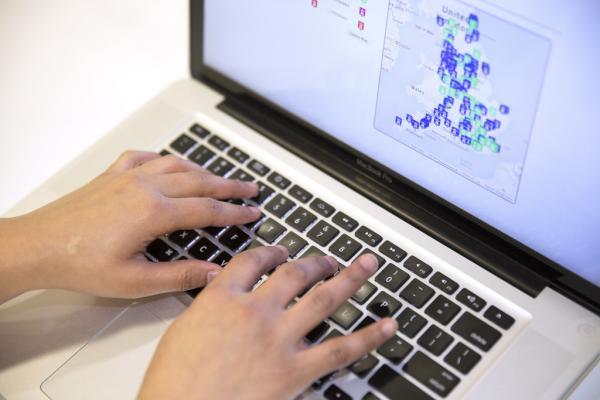
Of course, it's free to subscribe and there is also a newsletter, study quizzes/games and a map of where listeners tune in from. Also available for a nominal price are very useful study guides for iPod.
These audio lessons aren't just for people learning English! With words like quixotic, immure, abstemious and surreptitious, these lessons are incredibly useful for native English speakers preparing for SATs, GREs, college level English courses or just interested in expanding their vocabulary.
Welcome to Just Vocabulary's new website. We added lots of great stuff, like the Just Vocabulary Map, our new iPod Study Tools, a new game "the quiz" and much more. If you are new to the Just Vocabulary podcast, read more about the show here
About Just Vocabulary
Coming to you from Cape Town, South Africa! Just Vocabulary is an online audio-show/podcast, that introduces 2 words per show. It's aimed at ESL (English as second language) students. It's free, it's short, it's portable and it's on demand. No matter where you are, you can improve your English on the go! Educate yourself and subscribe for free!
The Host
Jan Folmer (1979) is the host of the Just Vocabulary podcast. He lived most of his life in The Netherlands and he moved to Cape Town in South Africa end 2004. English is his second language, which is why he understands the need to improve your vocabulary beyond your basic high school vocabulary. If you have any comments or suggestions, e-mail Jan
Show Format
The duration of each episode is about 5 minutes. During each episode, we introduce 2 English words. First, we give 3 to 5 example sentences, followed by the explanation of the meaning of the word. Synonyms and Antonyms are given for most of the words, and if it useful we give you the history of the word. At the end of the show we always review 1 word from previous episodes.
Most of the words are from the GRE word list which makes Just Vocabulary ideal for study purposes.
Test yourself!
Just Vocabulary wants your to be successfull on the SAT, TOEFL or GRE. Prepare yourself with the online quiz.
Frequently asked questions
Here you find all our Frequently Asked Questions, structured per topic. The questions are ordered per particular topic. If your question is not answered below, email your question and we'll answer it within 24 HRS.
Testimonials
All over the world people are listening to Just Vocabulary. Read what our listeners say about the podcast. And please don't forget to let us know what you think of the show.
Study Tools
We are really chuffed about the Study Tools that we developed to make your learning even more effective, and a lot more fun.
Use our flash cards on your iPod wherever you go to test your vocabulary!
Subscribe to Just Vocabulary Podcast.
View Just Vocabulary Podcast Feed on Free Language.
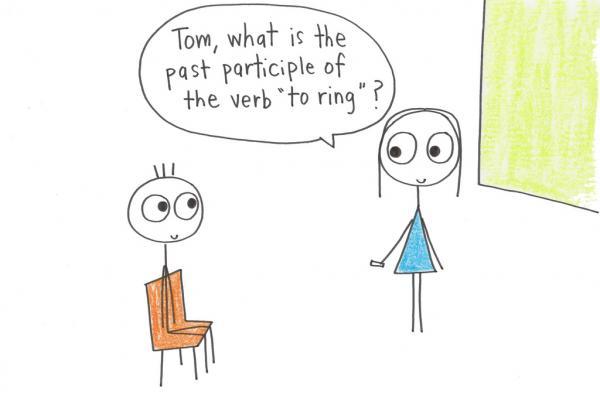
Verbbusters is a sweet and simple web application for testing and learning over 175 irregular English verbs, some of which are even tough for a native English speaker!
This is a really cool utility that is fast to use, is fully searchable, has audio recordings of the verb conjugations, gives nice results sheets that can be saved and referred to later using a screenshot or "save as" function on your browser and, perhaps most importantly for many, is quite serious about preserving the privacy of users. No account is required and the results of tests/quizzes are only cached temporarily. Bravo on the privacy!
The site also has quick-reference "spreadsheets" which list all of the verbs and their infinitive, past and participle forms alongside the infinitive forms for French, Spanish, German and soon Turkish, allowing native speakers of those languages to easily review and prepare for the quizzes.
Overall, this is a great resource for the tricky irregular verbs for which English is so infamous. (Embarrassingly enough, I scored perfectly on the basic test, but missed two on the advanced test! Rest assured I will not make those mistakes again! ;) See results below to see an example of test results (and revel in my ineptitude).
Verbbusters is dedicated to the English irregular verbs and includes a competitive exercise with rankings, reports and searchable lists. The site is free and no registration is required.
For all the geeks out there, I'd like to point out that in this video, the creator of Verbbusters is using Ubuntu Linux with Beryl - note the slick 3D transition in the middle of the video. :)
Wikipedia's Simple English Free Encyclopedia is an interesting concept that has actually created quite a following. The idea behind the wiki is to collectively create a free and open encyclopedia with articles that can be read by people with only a basic knowledge of English, and to help them learn and improve while discovering new topics.
I would recommend the Simple English Wikipedia for folks interested in learning about topics that intrigue them while simultaneously learning English. I enjoy this method because it is more meaningful to me than random texts that might not interest students, or have little information pertinent to what they are motivated to read about. Keep 'em interested!
When combined with the wonders of Wiktionary English, there is a lot of educational material and practice content to work with on Simple English Wikipedia. Enjoy!
About Us
This is Simple English Wikipedia. Wikipedias are places where many people work together to make encyclopedias in many languages. We only use very simple English words and simple ways of writing here.
There are tens of thousands of articles in this wiki. All of the pages are free to use. There is a discussion in the GNU Free Documentation License.
You are invited to help! You may change these pages and make new pages. Read the help pages and other good pages to learn how to write pages here. If you need help, you may ask questions at Simple talk.
What to Do
Use easy words and shorter sentences. This lets people with little English read them.
Write good pages, with care. The best encyclopedia pages have useful information. They are also carefully written.
Use the pages to learn and teach. These pages can help people learn English. You can also use them to make a new Wikipedia to help other people, if you change the words to your own language.
Visit Simple English Wikipedia.
Part of the content for this article was taken from another site of mine called Freestyle Language. If you are interested in reading about language bits and bobs that are "freestyle" in nature, have a look.
Babbel.com is the bomb. Not babble or Babel but Babbel! It's a website with slick tools and a smooth interface (modeled after a video game console) geared primarily towards learning and retaining loads of vocabulary terms and key phrases through audio visual.
The interface is pure eye candy and it loads quickly (I use a standard DSL connection) and works solidly. I have been testing Babbel out for a while now and it has never gotten buggy on me. The system tests me on terms and phrases I have already learned while incorporating new ones about topics that I elect and, thus, are more likely to be interesting and useful to me.
This excellent virtual flash card software also allows users to upload images to represent vocabulary items (be they nouns, verbs, phrases or what have you) and improve the learning experience for others. Users rate these images on how relevant they are for the term they represent, collectively choosing what most people feel best represents that term or phrase.
The flash card stacks are organized into "packages" (groups of cards) that treat a common theme, such as youth hostels, winter sports, restaurants and eating out, fruits and vegetables, clothing, standard greetings, giving and receiving compliments, etc. With input and contributions from the users, these packages get consistently better as more folks contribute.
Add to this the social twist that Babbel offers - the ability to hook up with other users interested in sharing language skills - and you have a well-rounded platform for beginners to excel rapidly in their first weeks and months working with a new language.
Currently, Babbel offers these features for learners of English, French, German, Italian and Spanish. This site is also localized in those languages, so if you like a challenge you can learn German in French, study Spanish in Italian, etc. This is cool for people who already have enough knowledge in a foreign language to understand and navigate the interface and can simultaneously maintain one language while learning a new one! I am learning German through the site, and I have chosen German as the interface language. That's another option for total immersion in the target language.
Thanks and many props to the folks at Babbel. :) I will definitely continue using the site to learn German - and I'll be waiting for more languages to appear on soon.
NB: Babbel isn't just a website, it is a full Web-software-powered environment for foreign language learning built with Flex. You'll need the latest Adobe Flash Player for your browser to enter the learning space. I recommend using Firefox for the best possible browsing experience.
Babbel.com Brings the Whole World Home
A new website with a social twist makes language learning easy and fun
Up until now, the best way to learn a language -- besides, maybe, in the classroom -- was to pack a bag, get on a plane or a train, and immerse yourself abroad. But what if you could learn, say, French, while eating a croissant in your own home and meet a real Parisienne in the process?
The idea of Babbel.com, the new, free language learning website with a social twist, is just that. This playful application is ideal for a quick start into a new language. With a design inspired by a game console, Babbel makes picking up new vocabulary effortless. But it also enriches and motivates by connecting you with the best teachers around: other Babbel users.
Babbel is truly multimedia, incorporating human voices and user-generated images into the teaching of real-life vocabulary. In Babbel's current languages of English, German, Spanish, French and Italian, you can learn, for example, how to shop for groceries, express your feelings, or flirt. In place of the traditional flash cards, an effective and "intuitive" repetition system makes cementing new content easy. Meanwhile, the unique Refresher tool tracks your learning progress and reminds you what to review.
A participatory experience, Babbel relies on you and its other users to create much of its content. Through a clean, easy-to-use interface, you can make a personal profile, finding a a "Tandem" partner who speaks the language you are learning as a native, or a "learning partner" studying the same language. You also can upload pictures that correspond to vocabulary, and then their relevance is voted on by native speakers before they are included in lesson packages. An extra fun aspect is a high-score tracker, which compares your progress with other users, like a video game.
And now, a new Board multiplies the opportunities for connecting by allowing you to chat real-time about -- or in -- your learning language. It has a section to find and check translations, search for alternatives to fixed phrases, or express spelling or grammatical doubts. There, you can also get in contact with people living in places you may be traveling, ask for tips, or even find a couch to crash on!
As users progress in their language studies, Babbel is fast developing, too. It has just launched full localized interfaces for native Spanish and French speakers, in addition to the current English and German ones.
Babbel is enthusiastically designed by a team of young software experts and language-instruction professionals at the Berlin-based company Lesson Nine. Founders Thomas Holl and Toine Diepstraten have many years of application development, IT management, community cultivation and interactive media experience. The other two founders, Lorenz Heine, was a co-founder and CFO of Native Instruments, and has extensive entrepreneurial experience in the software industry, while Markus Witte has online marketing and management experience, and a solid academic grounding in language, cultural theory and media. Content Manager Ulrike Kerbstat holds Master's degrees in language instruction and interpreting, and is fluent in German, English and French.
Through word-of-mouth, positive response from users, and excitement in the worldwide media, the number of Babbel users has increased at an astounding rate in places as far-flung as Caracas, Manhattan and Mumbai. And the best part is that, for the time being, learning for example how to order a Tapa in a Spanish bar costs a lot less than flying to Madrid: It's free.
Visit Babbel.com and start learning a new language in seconds.
ECPod is a booming site that has lots of different things all in one place. Mainly, the site offers a place for members of the community to upload and share videos that help others to learn Mandarin Chinese and English. Topics for the videos on the site range from Grammar to Humor to Kids to Whatever. There is a large variety of videos available on the site, and growing daily.
The site also offers a way to facilitate finding language partners for exchange and practice.
All in all, the site seems to be growing quickly into a vast repository of video materials for both English and Mandarin Chinese learners and teachers. Bravo!
Welcome to the ECpod community, where members from all walks of life in China and abroad teach each other Chinese or English and so much more. ECpod prides ourselves on the intrinsic value of not just book-learning but all the other qualitative factors that come from cultural exchange. You might learn the language, but we bet you will also learn cultural innuendo and colloquialisms. And guess what? It's free!
ECpod stands for "English Chinese Podcast" where our website's video clips are "Video Podcasted" by our members. While ECpod began as an English-and-Mandarin-only website, by popular demand we now accept clips in other Chinese dialects as well (for eg: Cantonese, Hakka, Hokkien and etc). We realized cultural exchange wouldn't be complete without the inclusion of a rich variety of Chinese dialects which tend to be characteristic of different parts of Chinese populated-areas. Furthermore, some dialects will be extinct within one or two generations. Preservation of Chinese culture and history is nothing if it does not also preserve the dialects spoken by some of the ancient families of yore.
Website Objectives
ECpod's main objective is to offer excellent interactive teaching tools for members to learn Chinese and English language. Other objectives of ECpod include:
* build a community of individuals with similar interest of learning a foreign language,
* bring the world closer together and allow members to meet and interact with people from different cultural background,
* to promote chinese cultures to the world,
* to promote English cultures to the world,
* most importantly, we strive to make education FUN and FREE !Why learn Chinese?
(the reasons can be endless but here are some......)
Napolean Bonaparte said, "China is a sleeping giant. Let her lie and sleep, for when she awakens she will astonish the world." Little did he know......
* China with its 1.5 billion people has the world's fastest growing economy and effectively Chinese/putonghua is used by almost one third of the world's population.
* Now most foreign companies cannot resist not entering China to set up factories that tap a seemingly endless supply of cheap labor or to partner local Chinese companies for distributing their products in China. Whether you are looking to set up factories in China, pitching cross-border IPO mandates or lobbying with the Chinese government for business licenses, it always helps to speaka-the-language!
* Even if you are living on the other end of the planet, you can't escape China. China's affluent ranks are among the fastest growing in the world and these individuals are quickly upgrading their lifestyles and vacationing all over the world. Wherever in the world you are, you will probably be swamped by at least reasonably wealthy Chinese tourists willing to spend. It can only be to your advantage to sell your products or services to them in Chinese.
* Your company is expanding into China and will consider sending you there to run the show......No harm picking up the language now.
* And also the first step to understanding the beauty of the chinese ancient culture is to learn the language.Why learn English?
(not difficult to understand why English is so important in today's information age......)
* Nearly a quarter of the world's population speaks some English. That includes around 400m who speak it as their mother tongue and about the same number who speak it fluently as their second language. (Source: The Economist, Dec 2006)
* Even though it does not have the greatest number of speakers in the world (as compared to Chinese), it is the most widely used language in the world, and it will be used by more people in the future.
* English is the major language of news and information in the world. It is the language of business and government even in some countries where it is a minority language.
* Three quarters of all telex messages and telegrams are sent in English. 80% of computer data are processed and stored in English.
* English is very important for international travel. Travel more easily and communicate with people wherever you go — English is spoken in more than 100 countries.