Download Language Freeware

Byki Free Language Software Downloads Logo

Byki is free software for learning over 70 languages. It's available for all the most popular languages as well as many minority and less-taught languages. Try it now!

You Make Language Happen

Free Language Newsletter

Discover the magic of learning languages.

Subscribe to the Free Language Letter.

Your Name:

Your Email:

Ask Questions, Get Answers

Ask Language Questions

Ask anything about learning and teaching languages! Share your language questions.

View questions that have been asked and answered. Together we are creating a collective knowledge base for effective language learning and teaching. You can help!

learn esperanto free

bab.la Learn 20 Languages Free

Outstanding Language Resource Localized in 20 Languages

Bab.la offers free dictionaries, vocabulary sets, flash cards, quizzes, games, conjugation tables, phrases, travel survival guides, a forum and, yes, even more.

The website is localized in Arabic, Chinese (Simplified), Danish, Dutch, English, Esperanto (!), French, German, Hindi, Italian, Japanese, Korean, Polish, Portuguese, Romanian, Russian, Spanish, Swahili, Swedish and Turkish. Wow!

What does "localized" mean?

"Localized" (localised in British English) means that Bab.la's interface is available in all these languages, so speakers can surf the site in their native tongue. This can be useful for intermediate and advanced learners who want the challenge of surfing in their target language.

Learning Resources for 20 Languages

All the above languages also have learning resources available!

Of special note on Bab.la are the free Survival Guides, downloadable PDFs for quick access to phrases and language essential for travel conversation, complaints and computers. Chatting, computing and complaining has never been so simple!

The phrasebooks available are also of special note, as they cover quite a lot of ground that is often not covered in traditional phrasebooks. These are separated into four main categories: Application, Academic, Business and Personal, and are available for all the languages above - quite a boon to anyone needing quick access to phrases used commonly in application processes and academic, business and personal settings.

To give a quick example of this, you can quickly find useful common phrases for email communication, invoicing, reference letters, announcements and invitations, reservations and more.

Dictionaries, Vocabulary Sets, Quizzes, Games and Conjugation Tables

The dictionary area of Bab.la offers quick and easy translation between all the languages above.

The vocabulary section offers vocab sets for job, school & university, travel, self-study, fun & hobbies and official exams.

The quizzes and games are fun for children and can even help keep teens and adults entertained while learning.

The conjugation tables are quite useful for the appropriate languages, which currently include Dutch, English, French, German, Italian, Polish and Portuguese. Some of these are also offered in sets, such as Polish <> German or French <> Italian, for the polyglots out there who like learning another language via a foreign language they already know :)

Tools: Broswser Plugins, Webmaster Widgets, Mobile Apps

All in all, Bab.la offers an amazing amount of material for free! There's even more that hasn't been covered here which is included in their Tools section. This includes dictionary toolbars and plugins for common browsers, dictionary widgets for websites and mobile dictionary apps (the apps are not free).

Your rating: None Average: 3.1 (34 votes)
TED Talks

A Hidden Gem for Language Lovers and Learners

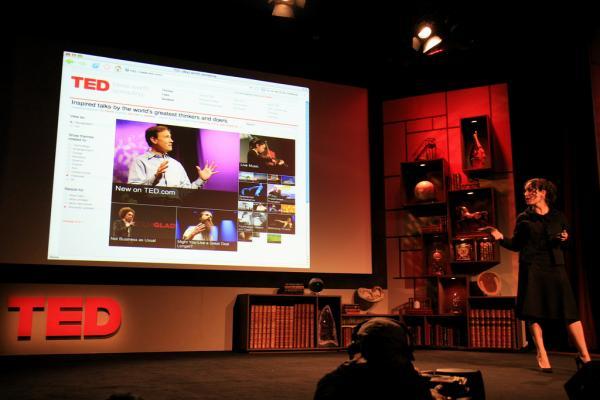
This article presents a unique approach for intermediate to advanced (and beyond) learners of many languages to gain exposure to interesting material in their target language(s). It has to do with a very popular website that features short (usually less than ten minutes) presentations by some of the world's greatest and most famous minds (not always both ;) on their specific areas of expertise. It's called, simply, TED, and the presentations are called "TED Talks".

The TED website itself is not geared towards language learners or educators yet is useful for both. It is especially useful for English learners, as all the talks are in English. But it's also useful for anyone learning most of the world's most-spoken languages (as well as numerous lesser-spoken ones) who want to simultaneously watch inspiring, funny, courageous, fascinating, informative, persuasive, ingenious and often jaw-dropping presentations about technology, science, entertainment, design, business and global issues - all while gaining exposure to their target language. Here's how and why...

Your rating: None Average: 4.2 (13 votes)
Six Ways to Learn Languages Free

Language Learning Tips on Using Free Wikimedia Resources

This article points out six useful ways to use Wikimedia content from Wikipedia, Wikibooks, Wikiversity, Wikinews, Wiktionary and Wikiquotes for learning languages free.

What's highlighted here is also great for teachers because it is licensed via Creative Commons and available to use for free.

Spanish is used as an example here, but the same ideas are applicable to all languages for which content is available.

1) Know General Info about Your Target Language

Find out general information about a language by viewing that language's Wikipedia entry. For example, here's the Spanish language entry on Wikipedia:

http://en.wikipedia.org/wiki/Spanish_language

It contains loads of general information, as well as specifics about grammar, alphabet, pronunciation, etc.

2) Use Wikibooks and Wikiversity Courses to Get Started

Your rating: None Average: 3.3 (56 votes)
Free Esperanto Phrasebook

Learn Survival Esperanto

Wikitravel users have collectively created a free Esperanto phrasebook with the goal of making it possible for travelers to "get by" in Esperanto, the most-spoken constructed international auxiliary language.

Wikitravel phrasebooks are available in many languages and each one varies in depth and detail. Most of the phrasebooks include a pronunciation guide, a general phrase list, information about dates and numbers, a color list, transportation-related phrases, vocabulary for shopping and phrases for eating and drinking. Some are even more in depth, and all are free!

From Website

Esperanto is the most widely spoken constructed international auxiliary language. Its name derives from Doktoro Esperanto (Esperanto translates as - one who hopes), the pseudonym under which L. L. Zamenhof published the first book detailing Esperanto, the Unua Libro, in 1887. Zamenhof's goal was to create an easy-to-learn and politically neutral language that would foster peace and international understanding between people with different regional and/or national languages.

Your rating: None Average: 5 (1 vote)
Forvo Improve Pronunciation Skills

Listen to Words in Dozens of Languages

Forvo is an interesting project which accumulates recordings of existing words in all languages. A lofty and, indeed, ongoing goal!

Language learners interested in finding out just how a word is actually pronounced by a native speaker of a given language will love this website!

Have a look at the languages page and you can quickly see which languages have the most words. There is a handy tag cloud on the side of the page which will show you in a visual way which languages have more words already pronounced.

And if you're interested, feel free to contribute to this collective pronunciation effort!

Your rating: None Average: 3.6 (38 votes)