Download Language Freeware

Byki Free Language Software Downloads Logo

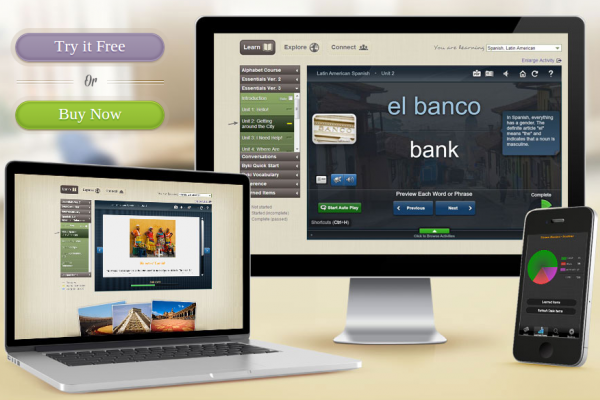
Byki is free software for learning over 70 languages. It's available for all the most popular languages as well as many minority and less-taught languages. Try it now!

You Make Language Happen

Free Language Newsletter

Discover the magic of learning languages.

Subscribe to the Free Language Letter.

Your Name:

Your Email:

Ask Questions, Get Answers

Ask Language Questions

Ask anything about learning and teaching languages! Share your language questions.

View questions that have been asked and answered. Together we are creating a collective knowledge base for effective language learning and teaching. You can help!

improve japanese listening skills

JapanesePod101

Proven Course Teaches Japanese Quickly with Audio, Video and Mobile Apps

Beginner and advanced levels alike will enjoy JapanesePod101, an excellent online and mobile way to learn Japanese quickly.

JapanesePod101's fun method and modern platform immerse you in the Japanese language, giving you just what you need to achieve your goals for travel, business, family and other needs.

JapanesePod101 is web and mobile based, giving you a custom Japanese Learning Center anywhere. Download podcasts on your iPhone, Android, iPod Touch, iPod or any mp3 player and take them with you for practice and learning on the go.

High-Quality Content for Learning Japanese

A key aspect to learning a language is quality content. JapanesePod101 creates a steady flow of fresh content covering everything from cultural aspects of Japanese to tidbits about navigating in Japan, plus practical information to help you get by.

Beyond Audio and Video

Engage in a combination of audio and video lessons, lesson notes and checklists, transcripts, PDFs, vocabulary training with flashcards and quizzes plus a Japanese dictionary, grammar bank, a verb reference, social network and plenty more.

It's simple to get a free lifetime account.

Your rating: None Average: 5 (2 votes)

Free Japanese Course with Flashcards and Sentence Manager

Summary

Japanese-Flashcards.com is a fast-loading, useful site for Japanese learners to manage and practice vocabulary lists (words and sentences). There are many existing word and sentence lists created by other users that you can snag and use right away. You can also create your own lists and sentences on-the-fly and test yourself until you know them all. As a result, this resource works for Japanese students of all levels, beginner to advanced. The self-testing is done via built-in flashcard software that you control.

The website has an integrated dictionary that gives explanations of terms and includes examples of how these are used in real sentences. In addition, when you view a sentence, you can scroll over the words and view annotations. NB: You can copy and paste any Japanese text you want into the site's Text Analyzer and it provides you with what you see below (see grey scroll-over pop-up in image for glosses).

Something I have found incredibly useful is the Sentence of the Day email that you can subscribe to on the site. This sends a different sentence every day and is complete with a translation of the sentence, plus a link to hear a native speaker say the sentence.

Japanese Text Analyzer

If you upgrade to a premuim membership (~$5/month) you can also hear audio for the sentence. In fact, the only thing you cannot do without a membership is hear the audio on the site. Other than that, it is full-featured and incredibly quick and helpful for learning Japanese through memorizing words/sentences and their constituents.

Bravo Oliver for this excellent site and keep up the great work!

From Website

Study Japanese from Home

Introduction

Since our first flashcard website started in 2005 a lot of time has been invested to design an efficient system which enables you to learn a new language in the shortest time possible. Make sure to read this introduction carefully so you understand how the system works. Once you know how this website works and you use it regularly it will become an important tool to learn Japanese. Ideally make time each day for 2 or 3 sessions a day, each lasting about 10 - 15 minutes.

Once you have created your own account you can set up your own word list. You can either add words manually or automatically to your own word list.

Automatic Mode

If you choose this mode then the system will choose random words for you to practice. Within the "Automatic Mode" there are two different choices. The first is "completely random words" and the second is "frequent words first". Obviously if you are a beginner you should focus on those frequent words first, if you chose the level "Complete Newbie", "Basic" or "Intermediate" the system will just do that. If you chose the level "Upper Intermediate" or "Advanced" completely random words will be added to your word list.

Manual Mode

If you would like more control over which words you learn switch to the "Manual Mode". In this mode you choose which words you want to learn and not the system. There are a few ways to add words manually. The first is to use the search function in the navigation bar on the left-hand side. You can search for Japanese or English words. On the result page every found word has an "Add Word" link next to it. Click it to add this word to your personal list. After you click it the link text will change to "Remove Word", so you can immediately remove the word from your list if you have added it by mistake.

The second way to add words manually is to click the link "Add new Words" in the navigation. This will show random words for you to add.

Finally you can add words by clicking on "Public Word Lists". These public lists normally have a common theme, like "Animals", "Computer", "Fruits", etc. You can either pick some words of these public lists or copy the whole list.

By default you are in the "Automatic Mode". If you do not want to add words automatically you can change this in the settings. In the "Automatic Mode" you can also add words manually.

The Loop

Japanese Course Free Sentence of the Day Email

The main problem of learning new words is that over time word lists grow very big. This means that the learner feels overwhelmed and the time between word repetitions becomes too long. To solve this problem a so-called "Loop" is used.

The Loop consists of a subset of only 30 words out of your word list. This means you can concentrate on a few words only, until you have memorized them properly. To keep a flashcard in the loop click on the "Loop" button.

If you have become familiar with a new word which is in the Loop click on "1 day", "7 days", "30 days" etc. Which means that the word will be shown only after the indicated time has passed. If you know a word very well click on "30 Days" or "3 Months" so the word will be shown only after a long time. After the indicated time has passed the word will be put into the Queue.

Once you remove a word from the Loop another one will be put in the Loop. The system will first check if there are any words in the "Queue". If the Queue is empty and you are in "Automatic Mode" the system will choose a new word for you and add it to your word list and into the Loop. If you are in the "Manual Mode" the system will tell you that you need to add more words in order to continue. It is important not to let the queue grow too big, otherwise the system will become increasingly inefficient. Your every day task is to clear the queue and add 5 to 10 new words to your list.

If you click "Remove" then the word will be removed from your word list. "Block" will do the same except that it will also prevent the word from coming back in the "Automatic Mode" where the system chooses words for you. By default there are 30 words in the loop. You can change the number of words in the loop in the settings.

Word Lists

If the Loop system sounds too complicated to you, then you can also set up simple word lists. To do this click on "[Manage Lists]" in the navigation. Then click on "[Add List]" to create a new list. If you want to share this word list with other users select the box "Public List". If you want to immediately add new words to this list select "Also Activate". You can create as many lists as you want. In the navigation bar you can always see which list is active at the moment. Words will be added to the currently active list.

Visit Japanese-Flashcards.com

Your rating: None Average: 4.8 (9 votes)

iTunes U Multilingual Mobile Language Learning

Summary

Apple recently released a new section of the wildly popular iTunes Store available through their iTunes software. This new section is called iTunes U, and collects podcasts from numerous universities and colleges to make them available for free download to your iPod or other mp3 player, mobile/cell phone, etc.

One of the sub-sections of iTunes U is (note: you need iTunes for this link to work) specifically for languages and language education - yay!

Currently there are 60 podcasts (probably more by the time you read this) available regarding both learning foreign languages as well as general topics regarding language in general. Many of these podcasts are called OpenCourseWare, considered Open Learning materials released in the Public Domain. This means they can be used truly freely by teachers and educators without worries about copyright issues - a big plus! Be sure to look at the license for each podcast to make sure of the licensing.

Apple Online Store

The podcast-based current courses available through iTunes U are English (Medieval and ESL), French, German, Greek, Japanese, Hebrew (various), Italian (Language and Theater), Romanian, Spanish (various) plus Language Technology and Lectures, Interviews, Clubs, Lectionary at Lunch and Storytelling Colombian Style. There are many more, too.

This is really exciting to see at this professional education level. Of couse, add this to the 982 language podcasts in the "regular" (non-iTunes U) iTunes store and that makes over a whopping 1,000 language-related podcasts for download through iTunes - all free. :)

Watch the iTunes U intro video below to learn more about this new feature:

From iTunes U

iTunes U puts the power of the iTunes Store to work for colleges and universities, so users can easily search, download, and play course content just like they do music, movies, and TV shows.

Always in session.

iTunes U delivers easy, 24/7 access to educational content from hundreds of top colleges, universities, and educationally focused organizations across the country. And it’s accessible to anyone with a Mac or PC.

Learning to go.

Students can sync iTunes U content with any iPod or iPhone, so they can go right on learning while they grab a meal, walk to class, or work out at the gym.

iTunes U Language University

Keeps them motivated.

Engaging students on their home turf, iTunes U offers audio and video that make subjects more vivid than any printed page ever could.

Open-minded.

iTunes U lets schools open all or part of their content to the public, from parents to alumni to anyone with a love of learning.

Find out more about iTunes U.

Your rating: None Average: 3.8 (24 votes)

Learn Japanese Language LingQ

Summary

The LingQ language-learning platform is among the most intentionally-created foreign language education products available. Developed by reknowned polyglot linguist Steve Kaufmann and company, LingQ is an excellent way to learn Japanese using materials you choose yourself!

In fact, this is where LingQ excels as an educational platform because students can import any license-free content they want to base their lessons around. This means that the students decide what subjects and topics they wish to learn about based on professional needs and/or personal interests.

The particular podcast highlighted in this article is JapaneseLingQ, a roughly weekly podcast with mp3 audio content for Japanese language learners. Transcripts of the podcasts are available through LingQ, and can also serve as learning content themselves.

One additional advantage of the LingQ system is that for a single subscription, you can use their web-based platform to learn ten languages (and growing) including Chinese, English, French, German, Italian, Japanese, Portuguese, Russian, Spanish and Swedish.

From Website

What is JapaneseLingQ?

First of all, the name itself (which is pronounced Japanese Link) needs a little explaining. The first part, “Japanese”, is fairly obvious since we teach Japanese. LingQ is the name of our online learning system which you can find at LingQ.com. At LingQ you’ll study many different languages in a fun, community atmosphere. The “Ling” in LingQ comes from TheLinguist.com the people behind LingQ. Lastly, the “Q” is important because it forms the speech bubble in our logo and throughout our site and because it makes “lingq” sound like “link” (we think!) which is what our system does for you.

At JapaneseLingQ...

. we LingQ you to a world of real Japanese content
. we LingQ you to our revolutionary learning tools
. we LingQ you to a community of fellow Japanese learners

Our podcasts may contain interviews, articles, or audiobook excerpts but are most often just general conversations in Japanese. We will usually talk about topics of general interest. Please do send us feedback and topic requests. We’re always happy to hear from you.

After you listen to the podcast, sign up for a free account at LingQ and study the full transcript using LingQ's revolutionary learning tools.

At LingQ, you may also want to submit writing for correction or join live 1 on 1 and group discussions with our tutors. Plus you will find thousands more podcasts with transcript. Come and find out what LingQ is all about!

Of course, even if you don’t decide to become a member, you can continue listening to the podcasts as long as you like.

Visit LingQ.com

MIT OpenCourseWare Foreign Languages and Literatures

Summary

MIT has joined a growing list of universities worldwide in the OCW (OpenCourseWare) Consortium. An OpenCourseWare is "a free and open digital publication of high quality educational materials, organized as courses".

Of interest to language learners is MIT's Foreign Languages and Literatures Department on the MIT OpenCourseWare website. While courses in this department range from "Communicating Across Cultures" and "Japanese Literature and Cinema" to "Topics in South Asian Literature and Culture" and "Expository Writing for Bilingual Students", they do also include specific language education courses. Currently at ocw.mit.edu, OpenCourseWares are available for learning the French, German, Japanese, Mandarin Chinese and Spanish languages.

What makes these truly "free and open" to the general public is the Creative Commons license under which these OpenCourseWares are licensed: The Creative Commons Attribution-Noncommercial-Sharealike 3.0 License. In a nutshell, this license gives the public freedom to share, copy, distribute, display and make derivative works of the courses as long as they give proper attribution, do not use it for commercial purposes and "share alike" (under the same license) any new changes or improvements.

This is an exciting project to see! In time, free and "OpenCourseWares" should be available for learning all the world's major languages and, I hope, at least some of the minority languages as well. Bravo MIT and the OCW Consortium!

From Website

MIT OpenCourseWare is an idea—and an ideal—developed, supported, and embraced by the MIT faculty, who share the Institute's mission to advance knowledge and educate students in science, technology, and other areas of scholarship to best serve the nation and the world. In 1999 the Faculty considered how to take best advantage of the Internet to advance education, and in 2000 proposed OCW. The rest is our history...

Link

Visit the MIT OpenCourseWare Foreign Languages and Literatures Department.

Your rating: None Average: 2.3 (11 votes)